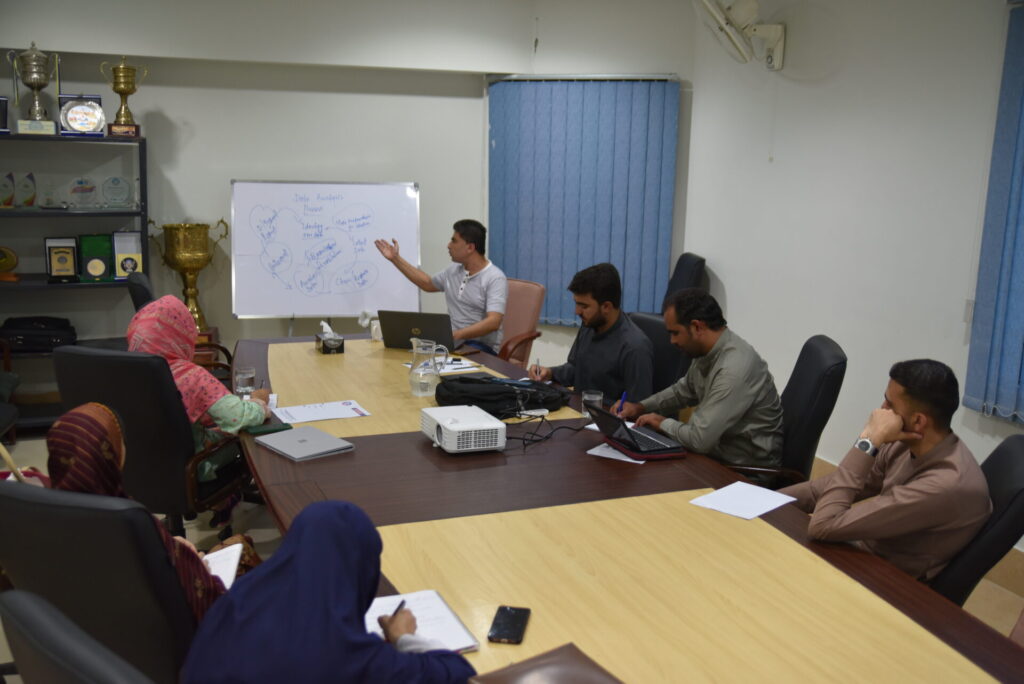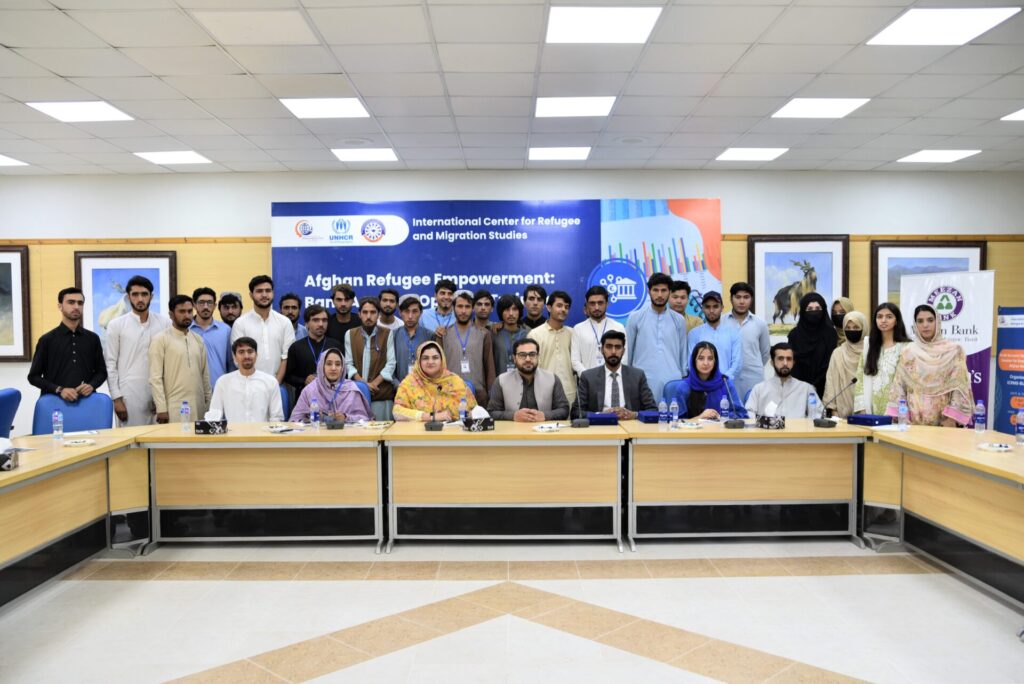
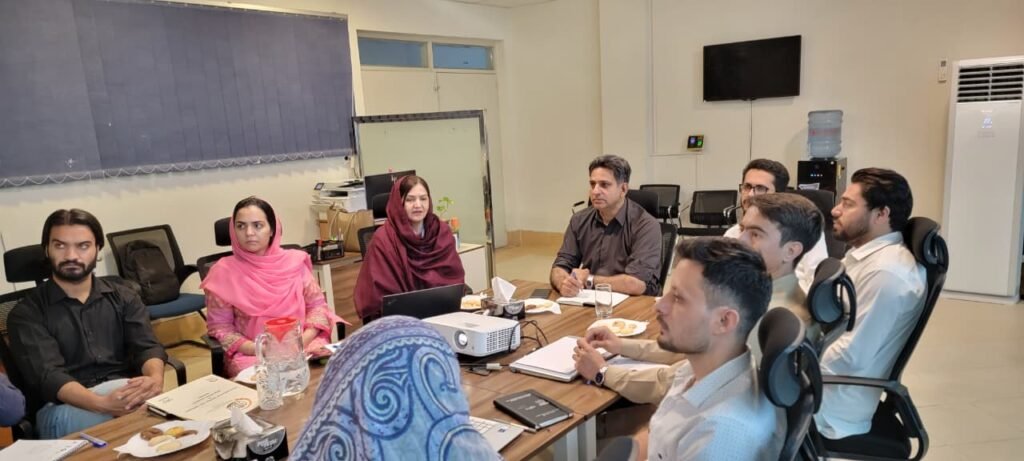
On 28 July 2026, the International Center for Refugee and Migration Studies (ICRMS), Balochistan University of Information Technology, Engineering and Management Sciences (BUITEMS) organized a comprehensive Protection Against Sexual Exploitation and Abuse (PSEA) training session for all ICRMS staff members. The session was facilitated by Ms. Tahira Awan, Senior Protection Assistant, UNHCR, with the objective of strengthening staff awareness, knowledge, and institutional capacity to prevent and respond to incidents of sexual exploitation, abuse, and sexual harassment in humanitarian and development settings.
The session commenced with opening remarks by Prof. Dr. Zahid Rouf, Director, ICRMS, who warmly welcomed Ms. Tahira Awan and expressed his sincere appreciation to UNHCR for conducting the informative and timely training. He emphasized that adherence to PSEA principles is fundamental to humanitarian work and highlighted the responsibility of every staff member to uphold the highest standards of integrity, professionalism, and accountability. He further encouraged participants to actively engage in the session and translate the knowledge gained into their daily professional responsibilities.
Session Proceedings
During the interactive presentation, Ms. Tahira Awan provided a comprehensive overview of Protection from Sexual Exploitation, Abuse and Sexual Harassment (PSEA/SH). She explained the concepts of sexual exploitation, sexual abuse, and sexual harassment, highlighting the differences between these forms of misconduct and their impact on individuals and organizations.
The facilitator emphasized how power imbalances can contribute to exploitation and abuse and discussed the ethical responsibility of humanitarian personnel to use their authority appropriately. Through practical examples and real-life inspired case studies, participants explored the consequences of abusing positions of trust and authority.
The session also covered:
- Understanding Sexual Exploitation, Sexual Abuse and Sexual Harassment (SE/SA/SH)
- Recognizing inappropriate and unacceptable workplace behaviour.
- The importance of maintaining professional boundaries.
- Understanding power dynamics and ethical responsibilities.
- Applying a survivor/victim-centred approach.
- Reporting mechanisms and organizational accountability.
- Individual responsibilities in preventing misconduct.
- Building a respectful, safe, and inclusive workplace culture.
An interactive Afrida Case Study was presented to help participants identify power imbalances, recognize warning signs, discuss preventive measures, and understand the responsibilities of staff, managers, witnesses, and organizations in responding to incidents.
Participants also engaged in group discussions and scenario-based exercises, allowing them to analyze real-life situations, identify appropriate responses, and reinforce practical application of PSEA principles.
The training witnessed the active participation of all ICRMS staff members, who contributed to discussions, shared experiences, and engaged in reflection activities throughout the session. Their participation demonstrated a strong institutional commitment to promoting safeguarding principles and fostering a culture of respect, dignity, and accountability.
Conclusion
The Protection from Sexual Exploitation, Abuse and Sexual Harassment (SE/SA/SH) Capacity Building Session significantly enhanced the understanding of ICRMS staff regarding the prevention of sexual exploitation, abuse, and sexual harassment in humanitarian settings. The session reinforced the importance of upholding ethical standards, protecting vulnerable individuals, reporting misconduct through appropriate channels, and contributing to a safe, respectful, and accountable working environment. ICRMS extends its sincere gratitude to Ms. Tahira Awan, Senior Protection Assistant, UNHCR, for delivering an informative, engaging, and practical training session. The Centre also acknowledges UNHCR for its continued technical support and collaboration in strengthening safeguarding practices, promoting accountability, and fostering a culture of zero tolerance for sexual exploitation, abuse, and sexual harassment across humanitarian operations.
Reported by Muhammad Asif
Reporting Associate