The International Center for Refugee and Migration Studies (ICRMS)-BUITEMS successfully organized the workshop on May 13, 2026. The workshop aimed to strengthen the capacities of refugee and host community students by enhancing their understanding of technology and innovation while promoting inclusive learning, collaboration, and youth empowerment.
The event formally commenced with the recitation of the Holy Quran, followed by the screening of the ICRMS introductory video, which highlighted the center’s mission, achievements, and ongoing commitment to education, research, and fostering engagement between refugee and host communities. The session was hosted by Muhammad Kazim, Liaison Officer, ICRMS, who welcomed the participants, facilitated the proceedings, and emphasized the importance of capacity-building initiatives in developing socially responsible and professionally competent future leaders.
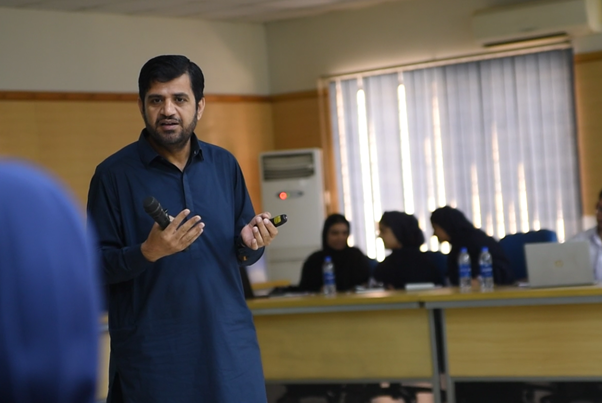
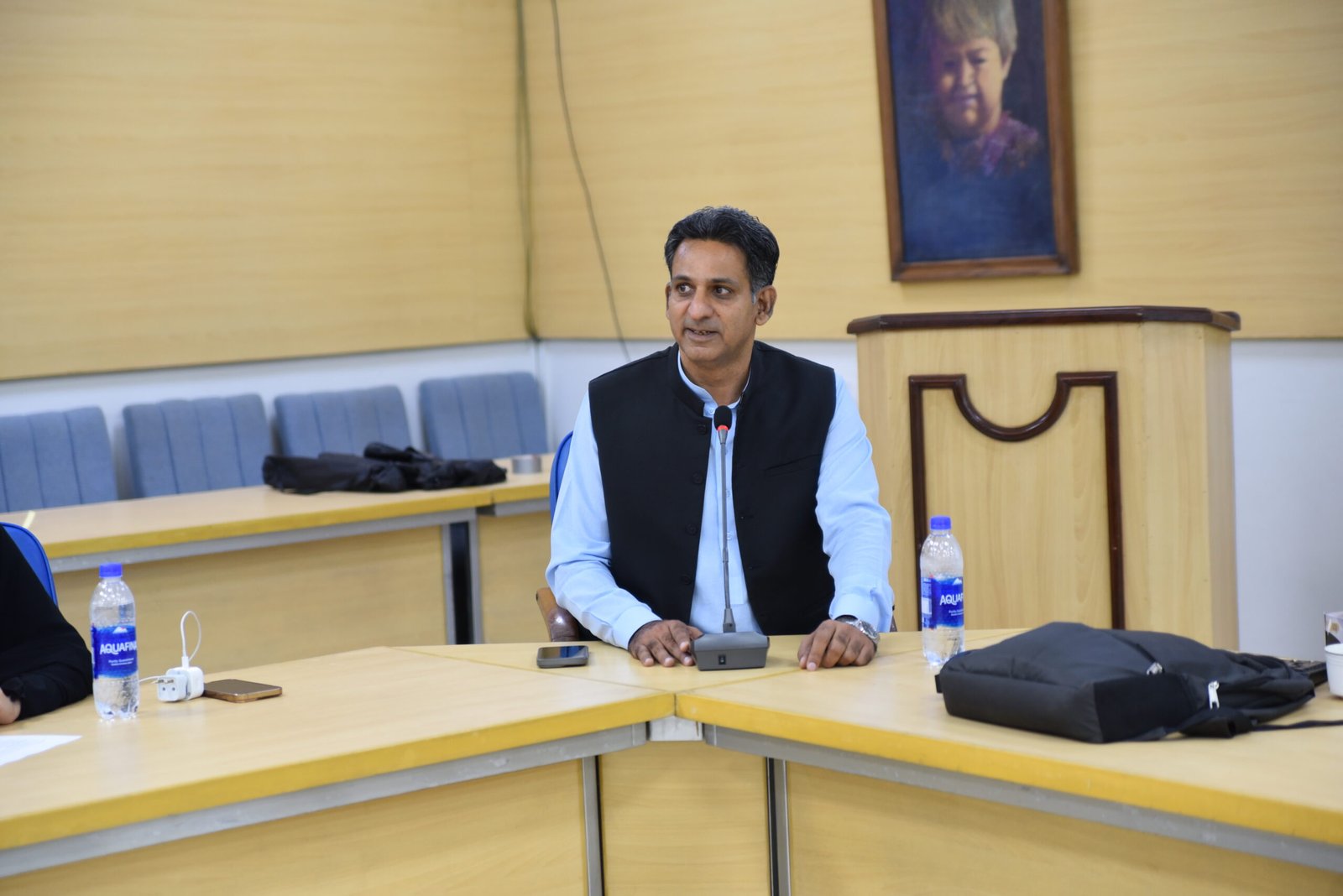
The session was delivered by Dr. Saeed Ahmed Magsi Assistant Professor, Department of Electrical Engineering who introduced participants to the fundamentals of Artificial Intelligence (AI) and its role in enhancing academic success and productivity. He demonstrated how emerging technologies can be applied in research, learning, communication, and time management. He also introduced prompt engineering using the CARE Framework (Context, Ask, Rules, and Examples), along with AI-powered summarization, academic planning, and the ethical use of AI tools. Through interactive, activity-based learning, participants explored practical applications of AI in study planning, note-taking, writing, and research enhancement. Dr. Saeed Ahmed Magsi further emphasized that AI should be used as a supportive tool to strengthen critical thinking and creativity rather than replace independent academic effort, while also addressing ethical concerns such as bias, hallucinations, data privacy, transparency, and accountability.
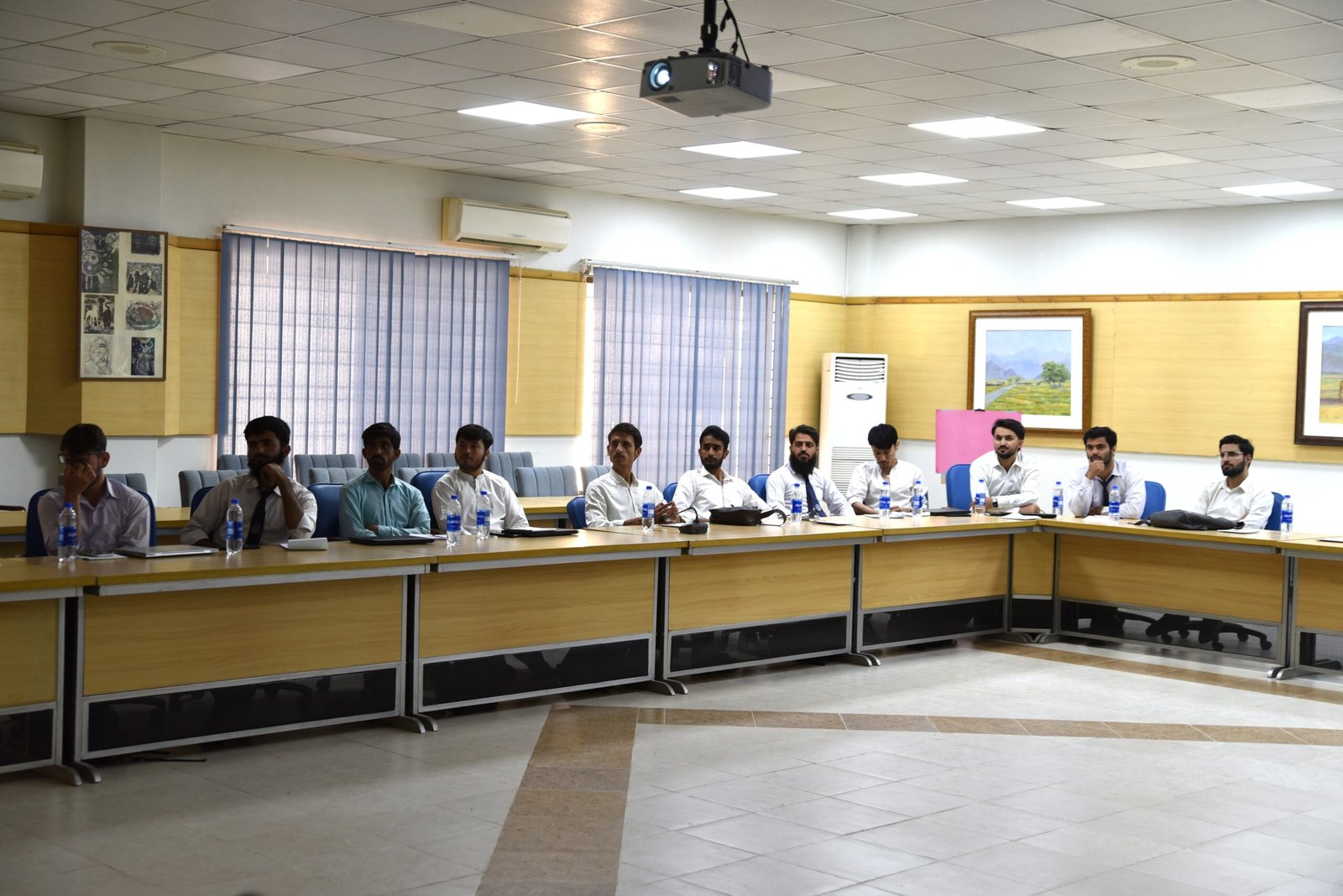
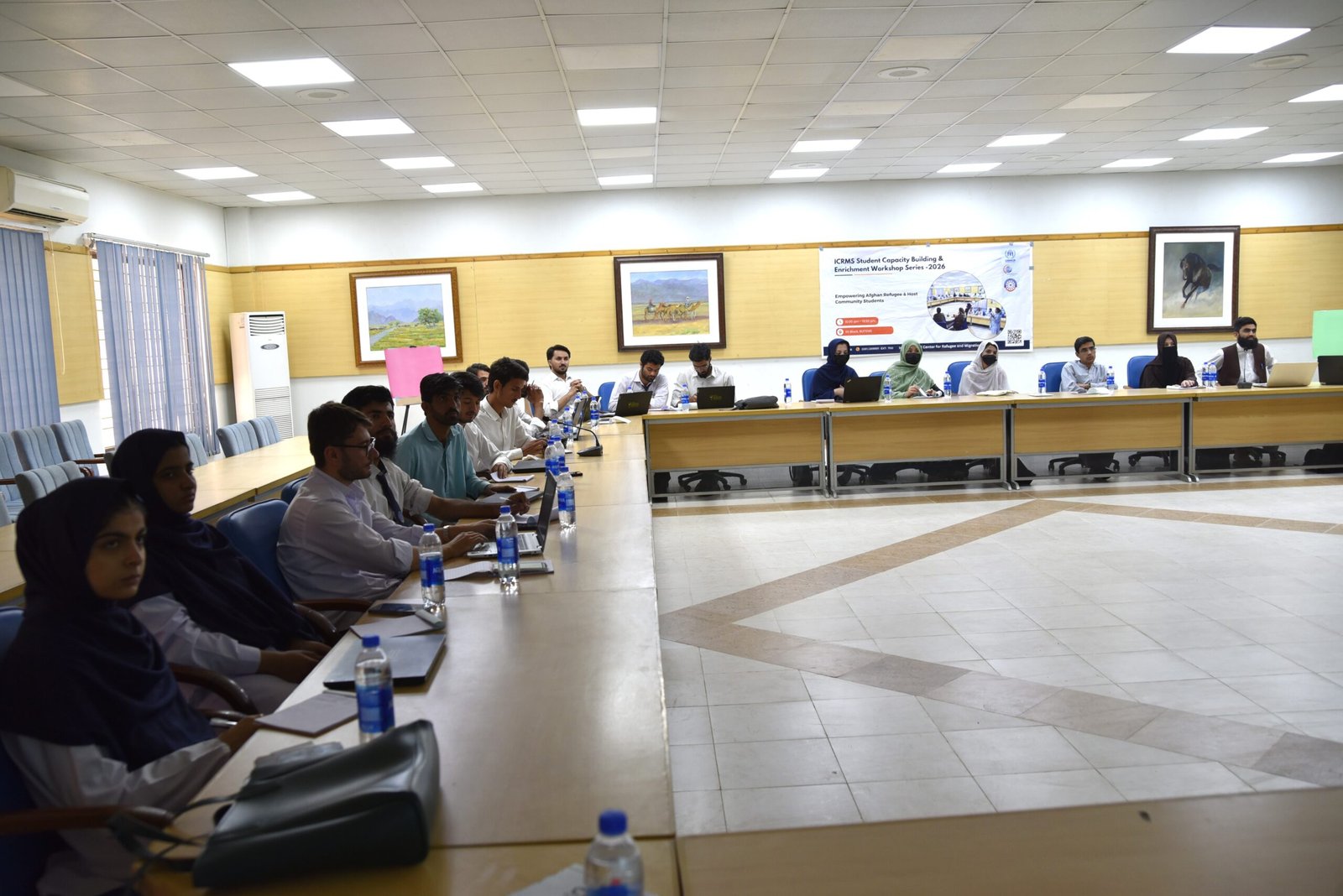
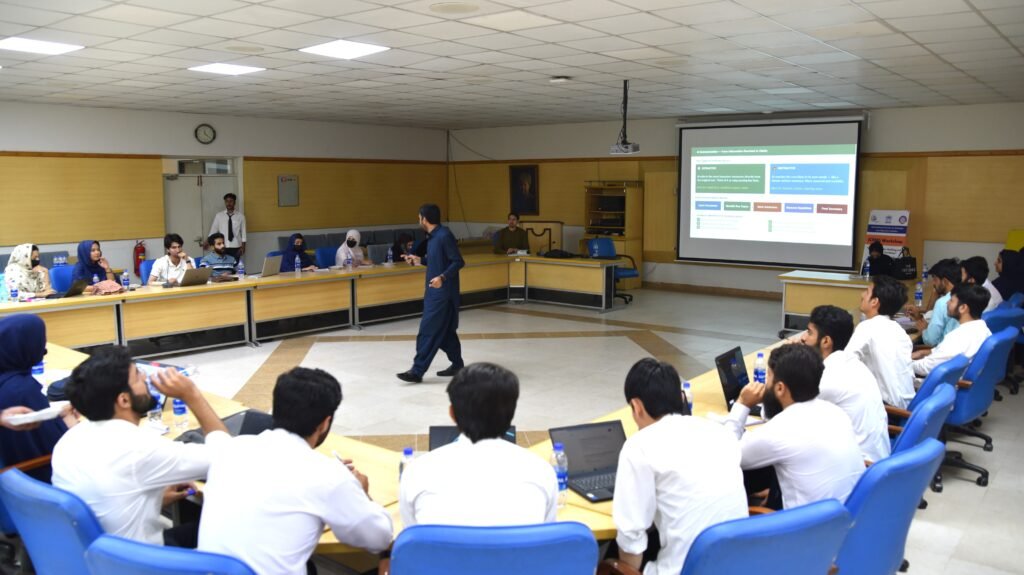
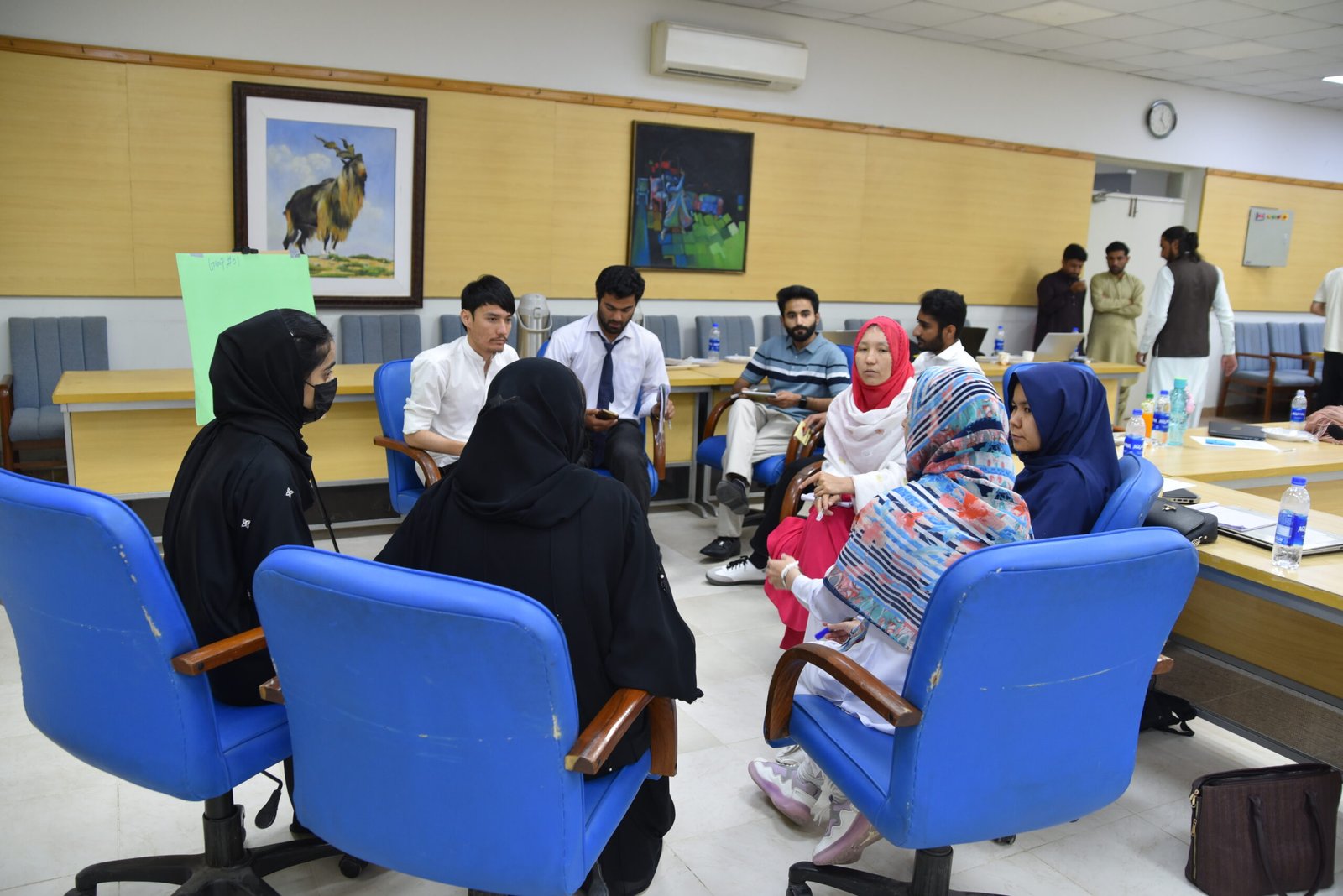
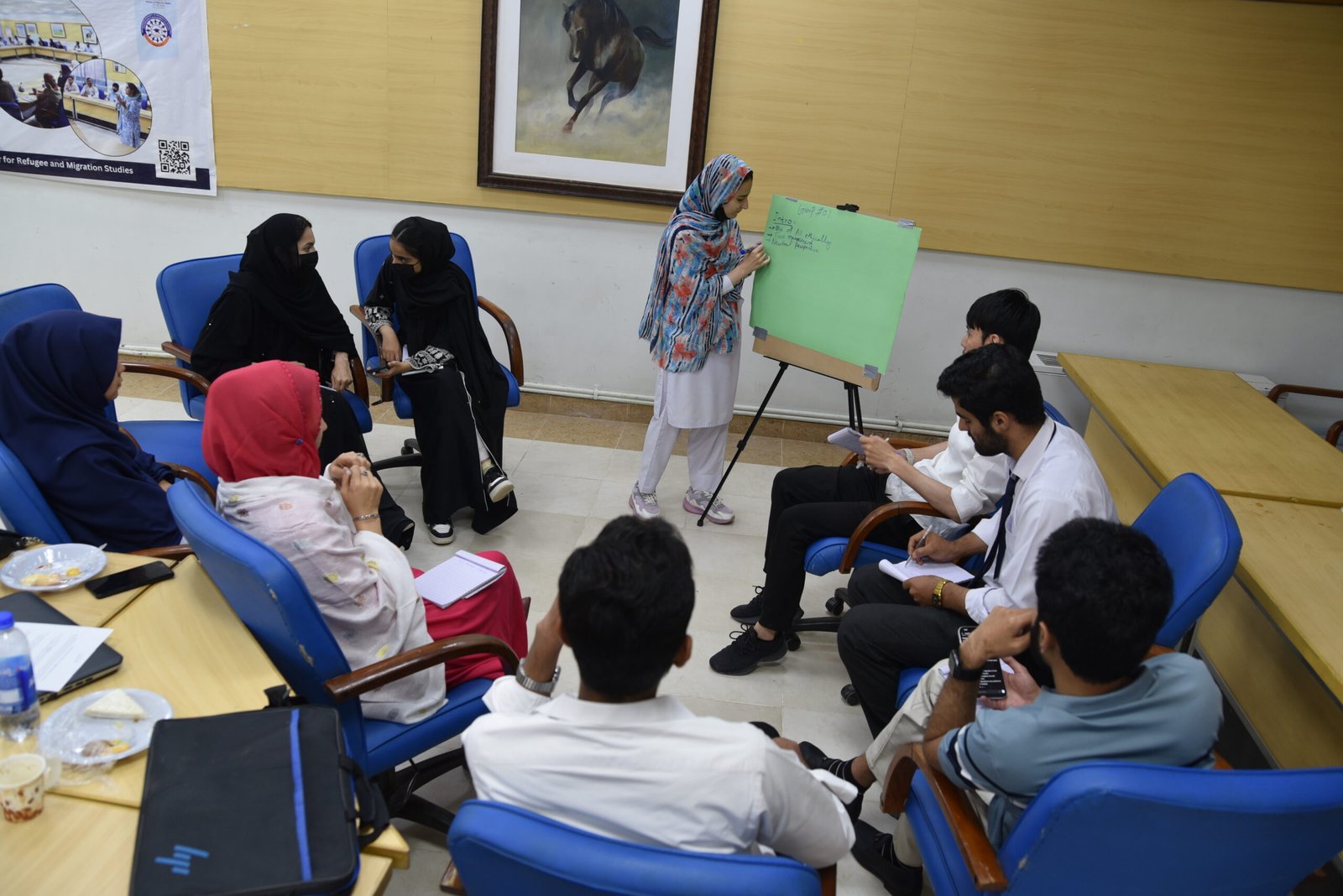
A group activity session was conducted in which students were divided into groups and engaged in structured discussions followed by presentations on key contemporary issues, including AI and academic integrity, AI in healthcare decision-making, AI in law enforcement, and the potential impact of AI on employment. The activity encouraged critical thinking, collaborative learning, and reflective dialogue on the opportunities and challenges of emerging technologies in society.
A total of 46 students, along with ICRMS staff, participated in the workshop, including both refugee and host community students. Among them, 25 were male and 21 were female, reflecting strong and inclusive participation from diverse student groups. The workshop provided an important platform for participants to engage in meaningful discussions, collaborative learning, and practical activities focused on personal growth and community development. Participant reflections and feedback highlighted the workshop’s positive impact on their personal and academic development, with students expressing appreciation for the opportunity to develop new perspectives on leadership, understand their responsibilities toward society, and strengthen their commitment to academic excellence, ethical use of technology, and active contribution to their communities.
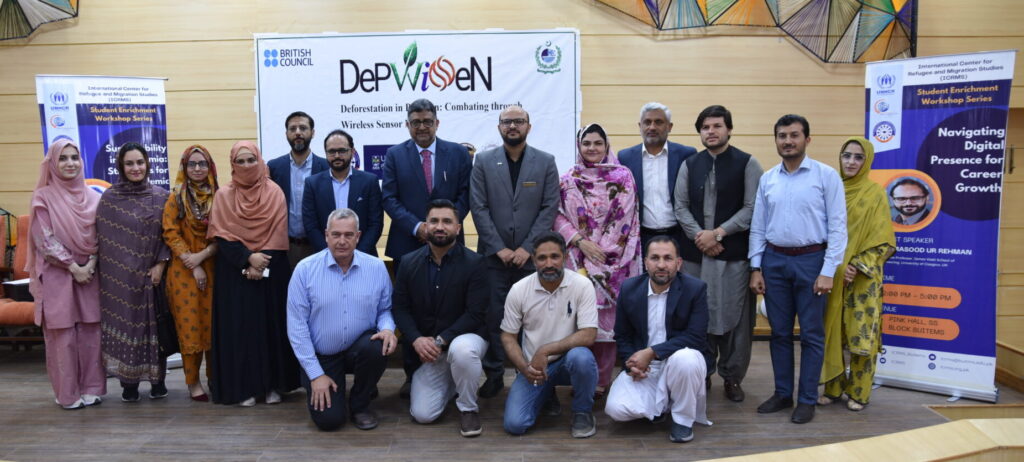
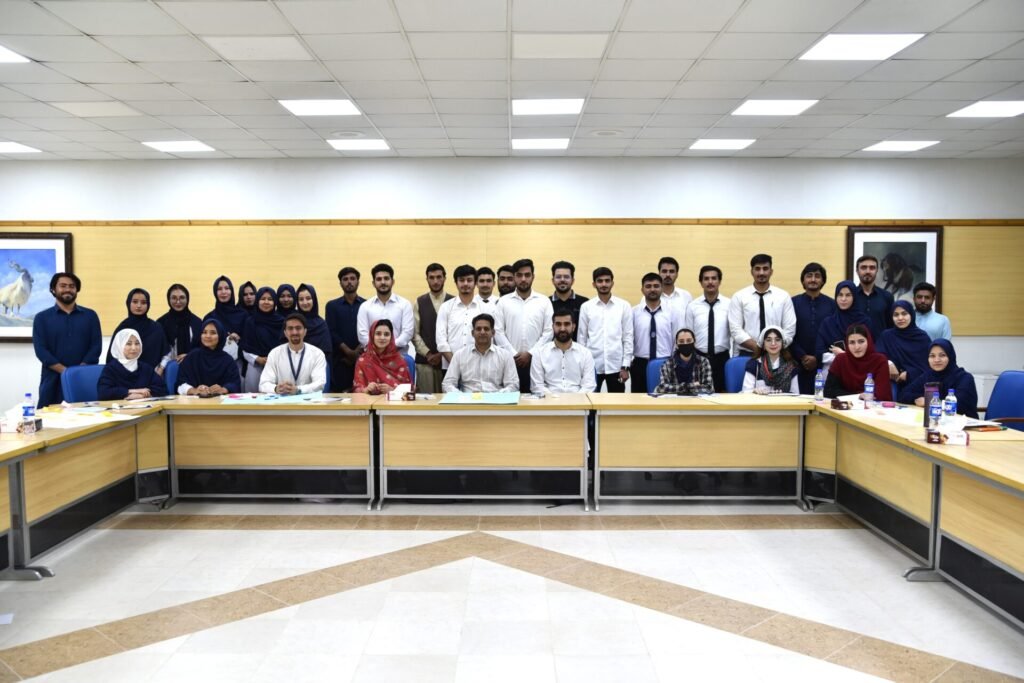
The workshop concluded with closing remarks by Prof. Dr. Zahid Rauf, Director, ICRMS, who appreciated the participation of students, the efforts of the resource person, and the dedication of the ICRMS team in successfully organizing the event. He commended the enthusiasm and engagement of the participants and emphasized the importance of continuing such capacity-building initiatives in the future to further enhance academic and professional development opportunities. He also expressed his gratitude to the students from various universities, including BUITEMS, the University of Balochistan, and Sardar Bahadur Khan Women’s University, for their active participation. Furthermore, he encouraged the participants to continue engaging in such academic and capacity-building activities in upcoming sessions. He also announced that similar events would be conducted in future sessions to further strengthen student learning and engagement. At the end of the ceremony, certificates were distributed among participants, while a shield of appreciation was presented to the resource person. The event concluded with a group photograph, capturing the collective spirit and success of the workshop.
Reported by Muhammad Asif
Reporting Associate